California's Allergen Menu Law: What Your Servers Need to Know Now

Hey Team!
California's SB 68, the Allergen Disclosure for Dining Experiences Act, signed in October 2025 and effective July 1, 2026, requires restaurant chains with 20 or more locations to disclose all nine major allergens on their menus, next to each item, or digitally via something like a QR code with a non-digital backup available for guests who need it. The nine allergens covered are milk, eggs, fish, crustacean shellfish, tree nuts, wheat, peanuts, soybeans, and sesame. The California Department of Public Health enforces it. That's the law. Check the actual statute and CDPH guidance yourself before making any compliance decisions, nothing I write here is legal advice.
Now let me tell you what actually matters at the table level, because this is where operators are going to get burned.
The menu does the disclosure. The server has to do the rest.
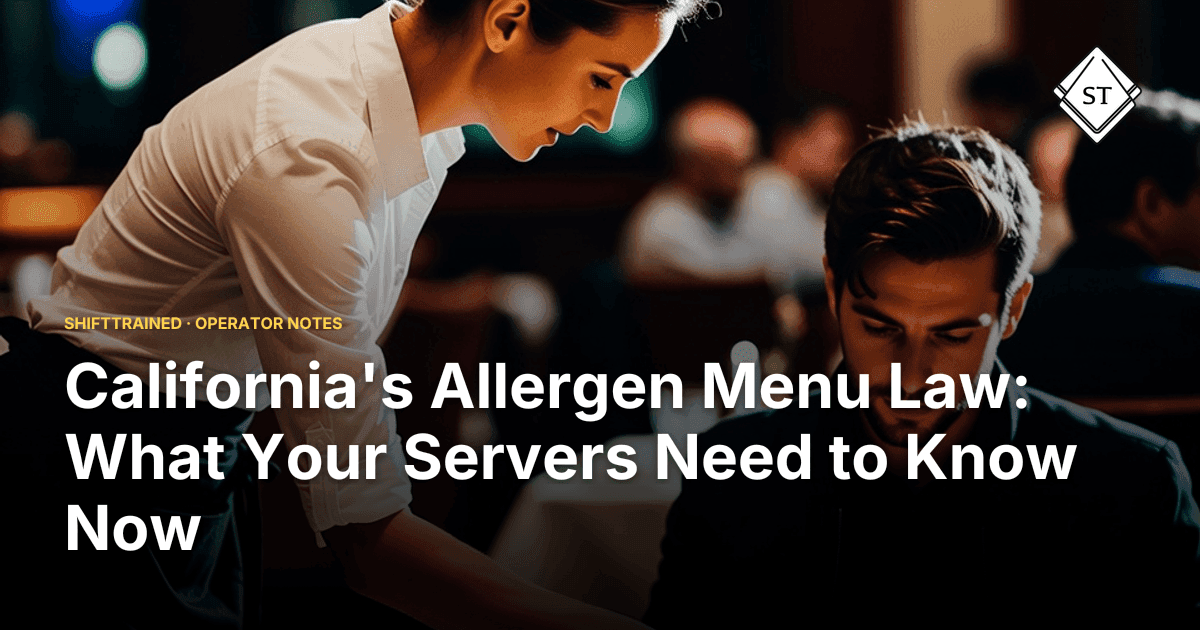
Think about what happens in real service. A guest scans the QR code, or they look at the printed allergen column, and they see "contains: milk, wheat." Then they look up and say, "Does the sauce have cream in it, or is it something else?" Or they ask if the kitchen can make it without the wheat component. Or they tell your server their kid is anaphylactic to tree nuts and they want to know what's safe tonight. None of that is answered by the printed line. All of it lands on your server, right then, with a table waiting.
That's the gap. A disclosure requirement tells guests what to ask. It doesn't teach your team how to answer.
I've been in this business 30 years. I've watched servers do what servers do when they don't know something: they guess, they downplay, or they disappear to "check with the kitchen" and never actually check. That third one sounds responsible but it isn't, because half the time they come back and say "I think you're fine" when they have no idea if that's true. An allergen mistake isn't a comp situation. It's a hospital situation.
SB 68 applies to chains with 20 or more locations, which tracks with the federal menu-labeling framework. If you're an independent, the law doesn't technically cover you today. But your guests don't know that, and they don't care. A mom with a kid who's allergic to sesame is going to ask your server the same question she'd ask anywhere else. The legal threshold is 20 locations; the real threshold is the moment a guest with a serious allergy sits down at any table you own.
Here's the part that stings: most of the allergen training I've seen in this industry is a laminated sheet in the back office. Maybe the manager walks a new hire through it once. Then that new hire is on the floor the following Friday, slammed at dinner, and a guest asks a real question, and the laminated sheet is nowhere near them and nowhere in their head.
Written disclosure plus untrained servers equals liability dressed up as compliance.
What your servers actually need to know is this. They need to know the nine allergens by name, not just that a list exists somewhere. They need to know which items on your current menu contain each one. They need to know your kitchen's cross-contact risk, because a fryer that's processed wheat all day is relevant information. And they need to know what to say when they're not sure, which is: "Let me get you a definitive answer from the kitchen" and then actually get one. That's not a complicated script. But it has to be internalized, not posted on a wall.
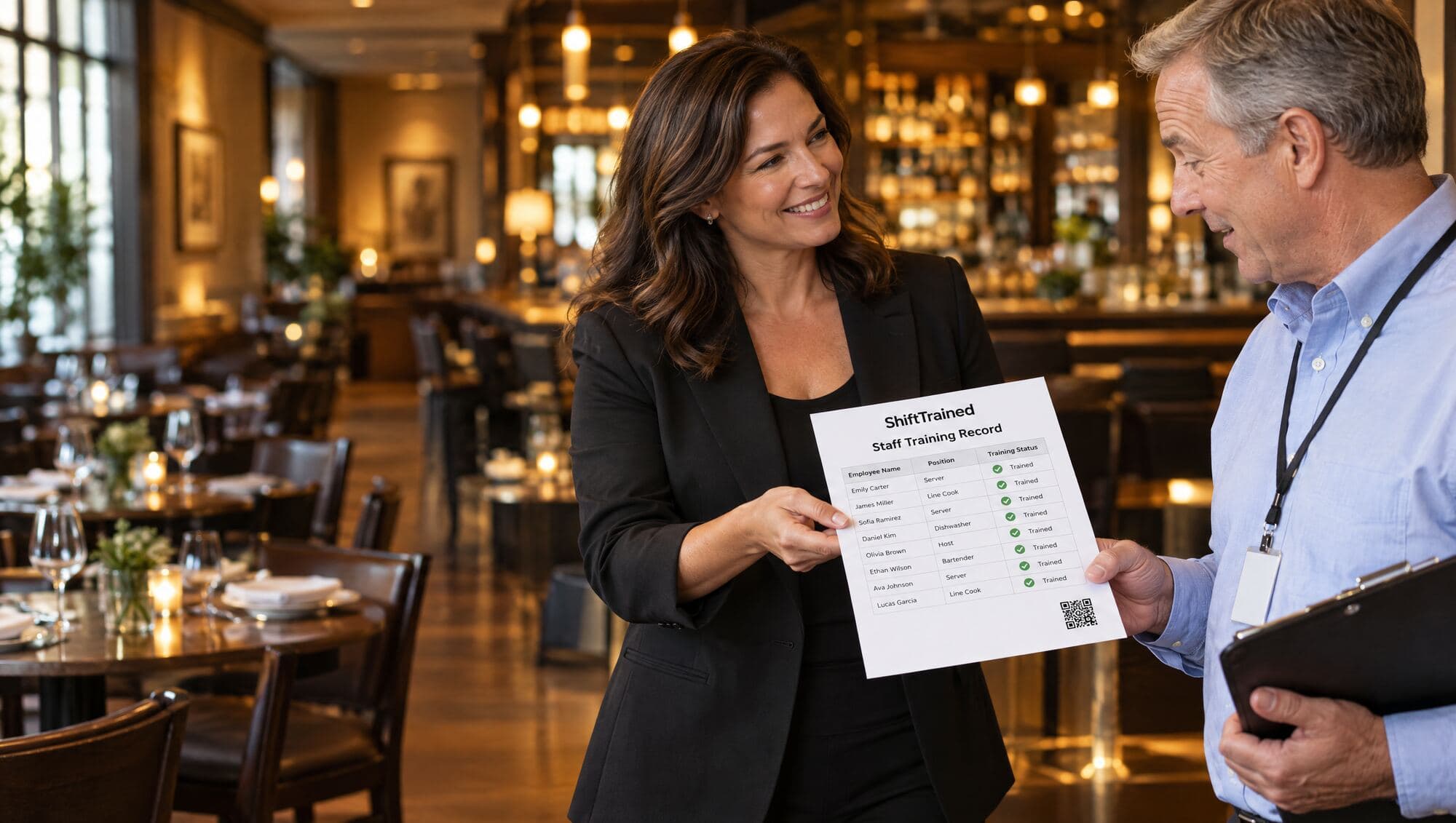
At Fat Tommy's we put allergen questions into regular training rotation. It's not a one-time onboarding module. Menus change. Suppliers change. A sauce swap in October can introduce a new allergen into a dish your servers think they know cold. The only thing that keeps the team current is regular, repeated testing that matches the actual current menu. We built ShiftTrained specifically to make that easy: upload the menu, and it generates quiz questions from what's on it, allergen information included. Staff takes them on their phones. When the menu changes, the training changes with it.
I'll say this plainly. No training platform, including the one I built, makes your restaurant compliant with SB 68 or any other law. Compliance is a legal question and it belongs with your attorney and your reading of the CDPH guidance. What training does is build the human layer on top of whatever disclosure your menu provides. Without that human layer, the disclosure is just text.
The conversation I see coming is this: operators in California scramble to update their menus for July 2026 and feel like they've handled it. Then a server freezes at a real allergen question six months later and the operator realizes the menu update was the easy part. Don't wait until that moment.
Whether you're subject to SB 68 or not, your servers will face allergen questions this week. They're going to face them because guests are more allergy-aware than they've ever been, because families with kids who have serious allergies eat out constantly and they've learned to ask, and because one bad experience travels fast. The menu line is a starting point. Your team's knowledge is the actual product.
Go read the law and the CDPH guidance. Then go quiz your servers on the nine allergens and ask yourself honestly how many of them could answer a real follow-up question without guessing. That's your actual gap.
Have a great day! — Terry Psaltakis
Your AI Restaurant Guy
For more on putting this into practice, see how ShiftTrained approaches restaurant staff training.