How to Run a Pre-Shift Meeting That Actually Trains Your Team

Let me paint a picture every restaurant manager knows.
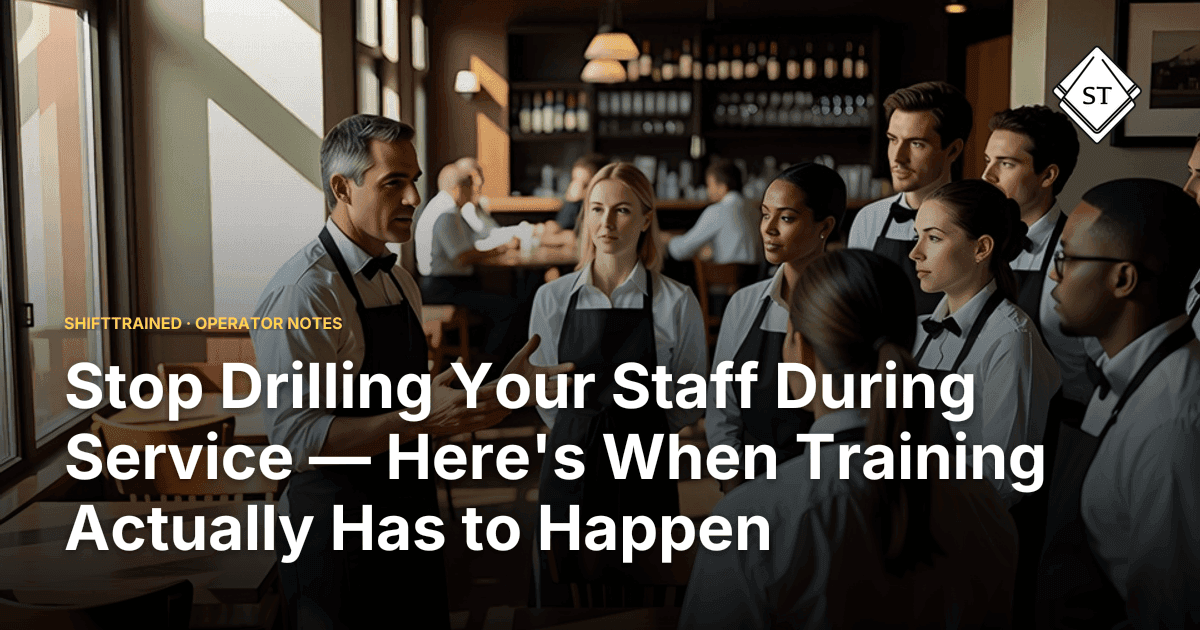
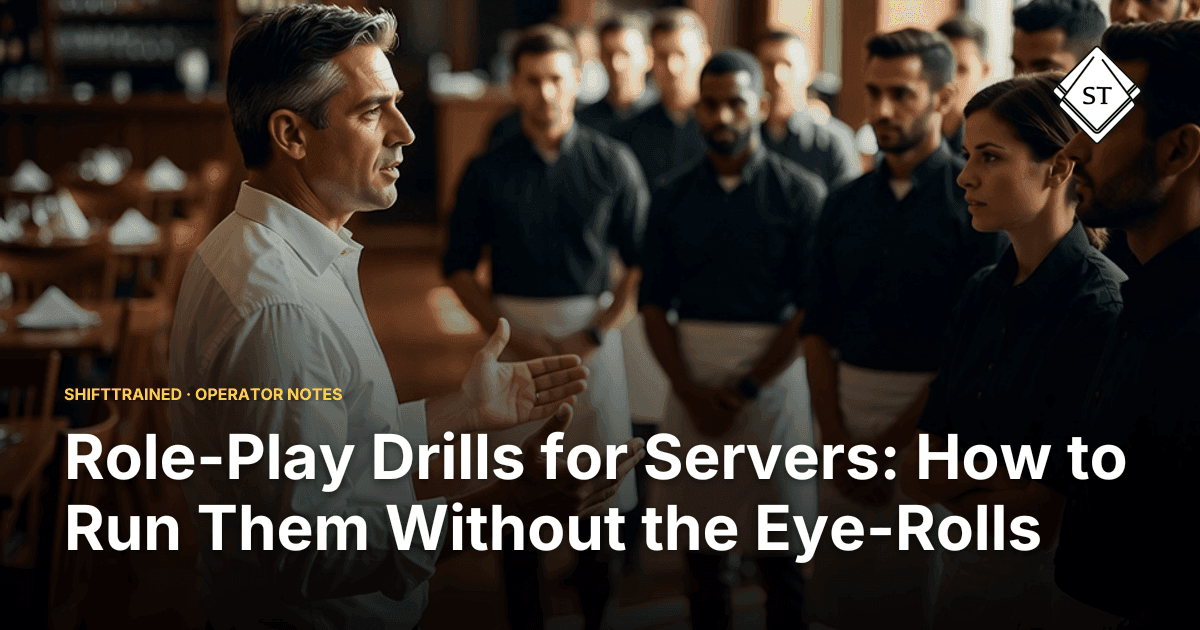
It's 4:45 PM. Service starts at 5:00. You've got six servers, two bartenders, and a busser standing in a half-circle near the host stand. You're running through tonight's specials, reminding everyone about the 86'd items, and trying to explain the new seasonal cocktail. Three people are on their phones. One showed up late. And the kitchen is already yelling about a catering order.
That's your training program. Fifteen stolen minutes before chaos.
Why Pre-Shift Training Fails
Pre-shift meetings serve a purpose — they're great for quick operational updates. What's 86'd, which VIP is coming in, who's covering section 3. But they are terrible at building lasting menu knowledge.
Here's why: information delivered in a group setting, under time pressure, with no individual accountability, doesn't stick. Studies on learning retention show that people forget roughly 70% of new information within 24 hours if they're not tested on it. Your servers aren't retaining the details of that new appetizer you spent three minutes describing. They're retaining that the side door is stuck again.
The Accountability Gap
The real problem with pre-shift training is that there's no way to know who actually learned anything. Everyone nods. Everyone says they understand. Then a guest asks about the braised short rib and your server says, "It's really good."
Without individual testing, you're flying blind. You don't know which servers need help with wine knowledge, which ones can't name the allergens in the Caesar dressing, or which ones think "aioli" and "mayo" are the same thing (they're not, and your chef would like a word).
What Restaurant Training Should Look Like
Effective restaurant staff training has three components that pre-shift meetings lack.
Individual assessment. Every team member proves their knowledge independently, not as part of a group nod-along. This is the difference between training and informing.
Immediate feedback. When someone gets a question wrong, they need to know immediately — what the right answer is, why it matters, and how to remember it next time.
Tracking and visibility. Managers need to see who's scoring well and who's struggling, broken down by category. Maybe your bar staff crush the cocktail questions but bomb the food menu. That's actionable information you can't get from a pre-shift meeting.
The restaurant industry is overdue for a training system that actually works the way modern learning works — on a phone, in short bursts, with real accountability. The tools exist. The only question is whether you'll keep relying on the 4:45 huddle or try something that actually sticks.
Have a great day! — Terry Psaltakis