The Pre-Shift Meeting Checklist That Actually Works

Hey Team!
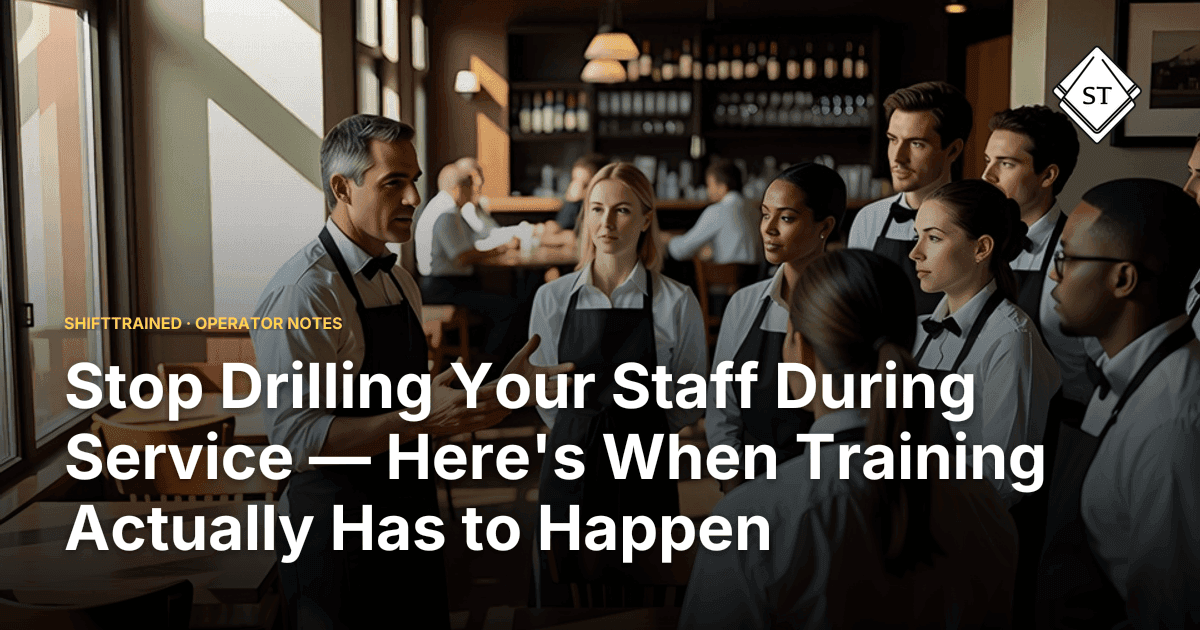
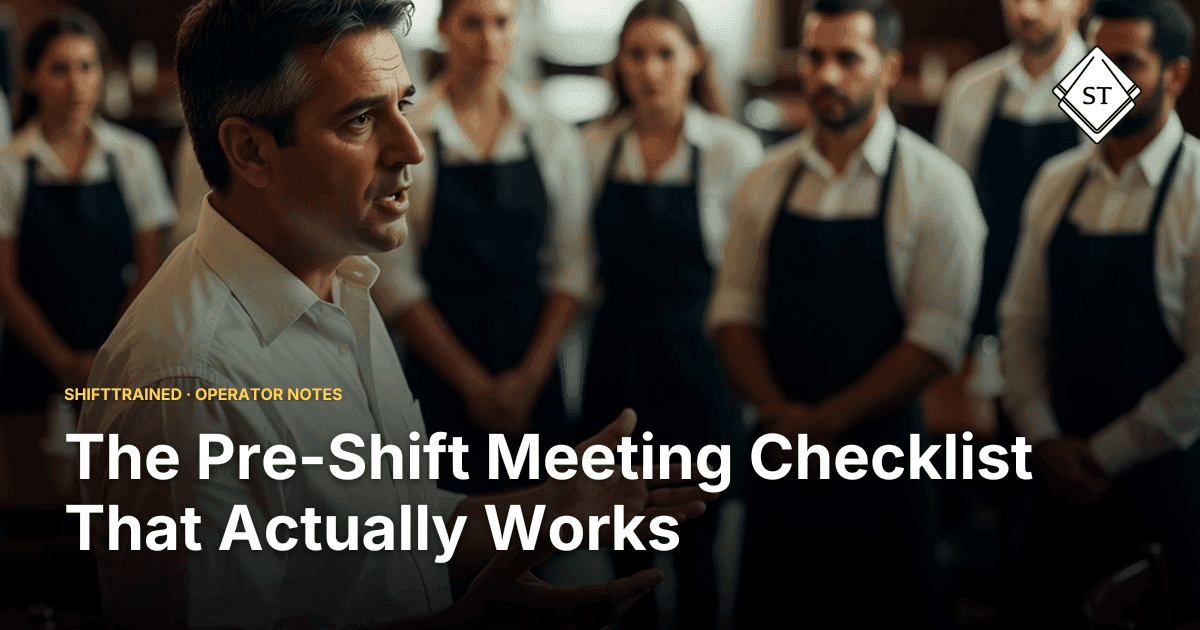
Saturday night at Black Barrel, 4:45pm. Fifteen minutes before the floor opens. My GM at the time is running a pre-shift meeting that's bleeding into its twentieth minute. He's reading from a printed sheet. Staff is nodding with their eyes open but nobody's home. One server is mentally already at table four. A busser is retying his apron for the third time. The bartender is watching the ice melt in his well.
I stood in the back and watched it happen, and I thought: this is theater. Expensive theater.
Here's the honest truth about the pre-shift meeting. Most operators treat it like a staff memo that happens to be spoken out loud. They cram in everything that made them anxious during the week. New 86s, policy reminders, a speech about sidework, the nightly specials explained in exhausting detail, and somewhere in there the thing everybody actually needed to hear gets lost. The meeting runs long. Energy dies. Service suffers.
The meeting isn't the problem. The format is.
The pre-shift meeting should be exactly five minutes. Not four, not eight. Five. If you can't run it in five minutes, you're using it as a substitute for training you should've done earlier in the week. And that's the real issue.
Here's what five minutes actually looks like. You open with yesterday's wins. Not a speech, just a sentence or two. "Table 32 left a note complimenting Maria on her dessert upsell. That's what we're doing." You're not running a therapy session. You're setting the tone. Thirty seconds, maybe forty-five. Done.
Then you move to today's specials. Not a lecture. You tell them what it is, what's in it, what to say about it. If the special has a protein from your supplier that's slightly different than last week, say so. Two minutes, tops. This isn't where you explain the dish's origin story and the chef's inspiration. You're equipping them for a conversation they're going to have in forty-five minutes with a table that's deciding between two options.
Then comes the part most operators skip, and it's the most important part. One menu question. Just one. You pick a server, you ask it out loud, and you wait for the answer. "Hey Mike, the salmon tonight, does it have any tree nuts?" And Mike either knows or he doesn't. If he doesn't, the team finds out now, not at table seven when someone's already ordered. This one question, done consistently every night, does more for your menu knowledge floor than any laminated flashcard you've ever made. Sixty seconds.
Then shift assignments. Who's got what section, who's on support, who's cut first. Thirty seconds. This should be posted somewhere already, so you're just confirming. If someone has a question, answer it after. Keep moving.
Then you say go.
That's it. Five minutes. By minute six, I want people filling water, staging their stations, and actually getting ready to work. Not standing in a circle listening to a manager recite things they could've read on a whiteboard.
Now here's the part people push back on when I say this. "But Terry, what about all the other stuff? The new menu changes, the allergy updates, the service standards, the steps of service refresher." And my answer is always the same: that stuff doesn't belong in a pre-shift meeting. It belongs in training. Real training. Training that happens on their phones, at their own pace, before they ever walk on your floor.
The reason operators dump everything into the pre-shift is because they don't have another mechanism for it. They never built one. So the meeting becomes a catch-all for every anxiety the manager has about what the staff might not know. That's not a meeting problem. That's a training infrastructure problem.
When I built ShiftTrained, this was exactly the problem I was solving. Not the five-minute meeting. The stuff that kept bleeding into it. The menu updates, the modifier changes, the allergen drills that every operator knows are critical but nobody has a clean system to run. When you have a place where that knowledge actually lives, and where staff can actually prove they've absorbed it, the pre-shift meeting becomes what it was always supposed to be: a brief, energizing handoff before service.
At Fat Tommy's, one of our managers started ending every pre-shift with "anything else?" and the answer was almost always silence. Not because the staff didn't care. Because everything else had already been handled. The meeting could just be the meeting.
There's a version of your pre-shift that your staff actually looks forward to. Where you call out something real that happened last night and it lands. Where you ask one question and the person who answers it right gets a small nod and it means something. Where the whole thing has energy because it's short enough to hold it. That's not an accident. It's a structure.
The longer the meeting, the less anyone retains. You can verify this yourself tonight. Run a twenty-minute pre-shift. Then ask three people an hour later what three things you covered. You'll be lucky to get one clean answer. The format that respects people's time and attention also happens to be the one that actually works.
Five minutes. Yesterday's win, today's special, one question, assignments, go. Everything else belongs somewhere else. Build the somewhere else, and the meeting fixes itself.
Have a great day! — Terry Psaltakis
Your AI Restaurant Guy