What Restaurant Managers Get Wrong About Pre-Shift Meetings

Hey Team!
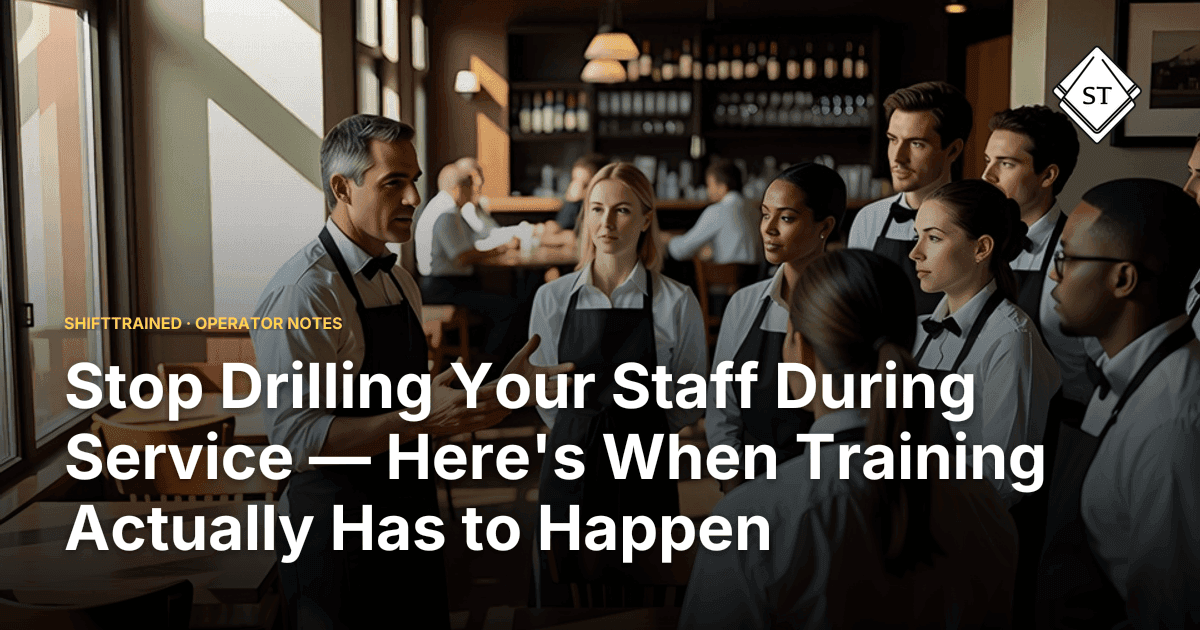
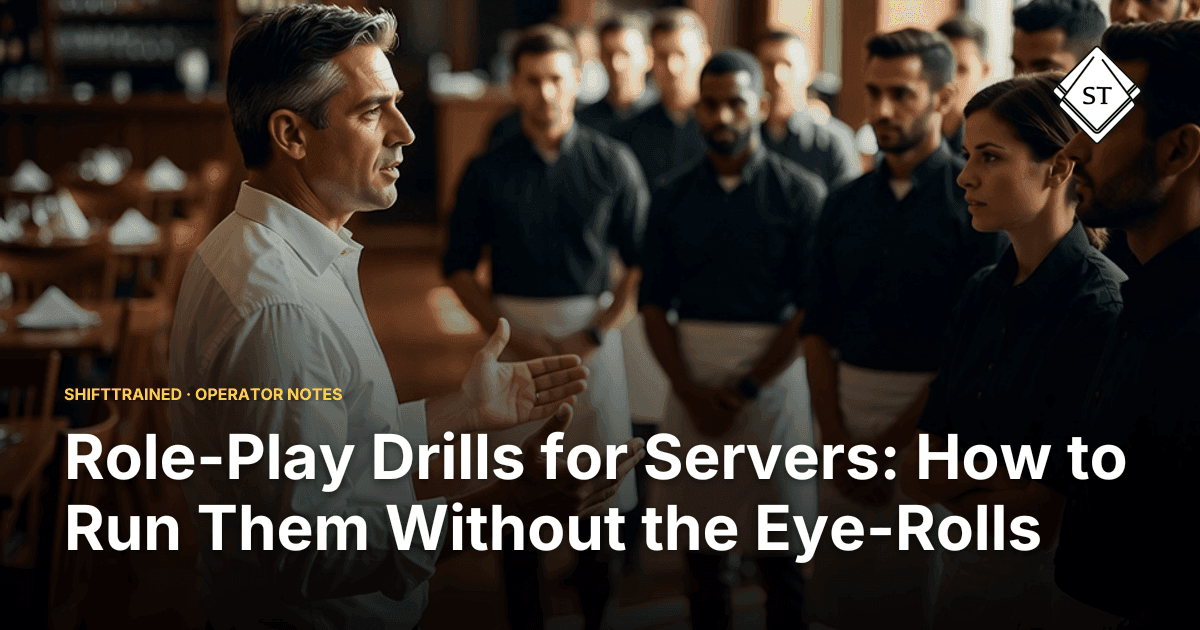
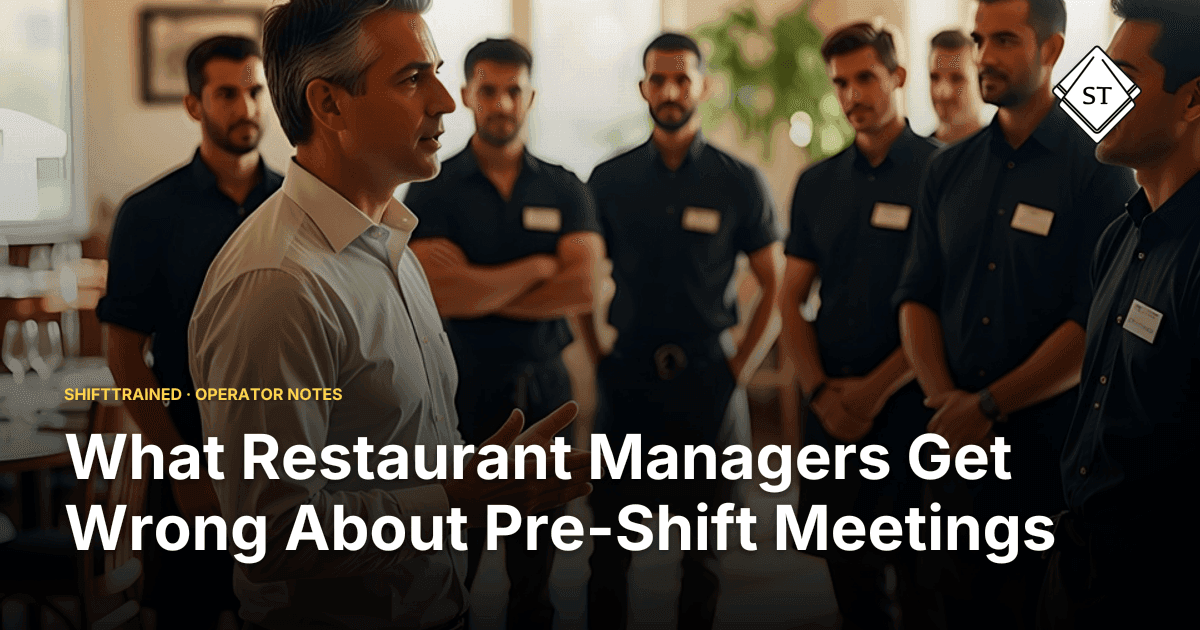
Saturday night. 5:45pm. Your dining room fills up in fifteen minutes and you've just spent twelve minutes at pre-shift telling the crew about the new walnut-crusted salmon special, the 86'd risotto, the table touching sequence you want tonight, the wine pairings the chef wants pushed, and the fact that little Jayden at table 12 has a tree nut allergy. Your staff nodded. A few of them wrote things down. One of them was definitely thinking about something else.
By 7pm, maybe half of that is gone.
I'm not guessing at that number. Hermann Ebbinghaus figured this out in the 1880s. His forgetting curve shows that without any reinforcement, people lose roughly 40% of new information within the first hour. By 24 hours, depending on the material and the person, you're looking at 50 to 70% gone. You stood up there for twelve minutes and delivered what felt like training. What actually happened was theater.
I've been running restaurants for thirty years. I've done thousands of pre-shifts. Some of them were genuinely good. I've had cooks stop me mid-sentence to ask a real question. I've had servers write down the description of a dish so carefully I thought they'd pass a written test on it. And then I watched that same server, two hours into a busy service, blank completely on what was in the bisque when a guest asked. Not because she didn't care. Because her brain did exactly what brains do when information arrives once, verbally, under pressure, right before a sprint.
Pre-shift has a real purpose. It's not nothing. It sets the tone. It gives the team a shared moment before the chaos. It's where a good manager can read the room, handle whatever drama walked in the door that day, and remind people why we're all here. That stuff matters. I'm not saying kill pre-shift. I'm saying stop confusing it with training.
Here's the thing nobody in restaurant management wants to say out loud. Most managers treat pre-shift as the training event. The whole content delivery happens in that window. New menu item? Pre-shift. Allergy flag? Pre-shift. 86 list? Pre-shift. And then we wonder why a server upsells the risotto that's been off the menu since Tuesday or why someone forgets to tell a guest that the pasta contains walnuts.
The problem isn't the managers. The problem is the model. Verbal one-time delivery is a terrible learning format for anything you need people to actually retain and apply under pressure. Especially in an environment where they're about to be hit with 40 simultaneous demands on their attention the moment those doors open. Information delivered at 4:30 competes, by 7pm, with a four-top who just asked for separate checks, a server who called out, and the bar being three drinks behind. The salmon special doesn't stand a chance.
What actually works is what the research calls spaced repetition. Small amounts of content, retrieved multiple times, spaced out over days. Not a lecture, but a question. Not passive reception, but active recall. Every time someone pulls a piece of information out of their own memory, the retention goes up. That's not a theory. It's decades of cognitive science. The testing effect is one of the most replicated findings in all of learning research. You don't learn by hearing. You learn by being asked, getting it wrong, and being corrected, and then being asked again.
This is exactly why at Fat Tommy's we stopped relying on pre-shift as the knowledge delivery mechanism for anything critical. When we added the walnut cream sauce to the Thanksgiving menu two years ago, we didn't just announce it at pre-shift and call it training. Every server took a short quiz on their phone before service started. Three questions. What's in it, what's it paired with, what do you say when someone asks if it's nut-free. They got it right or they got corrected right there on the screen. Then two days later, same questions came back around. By the time we were four days into that menu item, I wasn't worried about a server blanking on it mid-service. The information was in there.
That's the difference between delivering information and building knowledge. Pre-shift delivers. Spaced practice on phones builds.
And the phone part matters more than people expect. I hear managers say their staff won't do it. That it feels like homework. That people resist. My experience is the opposite. Staff at Black Barrel Tavern retake quizzes on their own time without being asked. Not because I made it mandatory, but because the format fits how they actually live. They're on their phones constantly. A three-question quiz that takes ninety seconds fits right into that behavior. A printed sheet with ten menu descriptions they're supposed to study does not. Nobody's studying that sheet. It's in a locker or folded in a pocket or thrown away. The phone wins because the phone is where people actually are.
There's another piece of this that doesn't get talked about enough, which is the accountability gap in verbal pre-shift. When you tell something to a group of twelve people, you have no idea who got it and who didn't. The person who nods most confidently might be the most lost. There's no signal. When someone takes a phone quiz, you have a record. You know exactly which staff members are solid on the allergen protocol and which ones need another pass before you put them on the floor. That visibility changes how you manage. You're not hoping everyone got it. You know.
I've seen this go wrong in expensive ways. Not at my places, but I've talked to enough operators. A server who doesn't retain allergen information isn't just an embarrassment when a guest calls it out. It's a liability. The Cornell study by Tracey and Hinkin puts the cost of replacing a single restaurant employee at $5,864. That number includes recruiting, training, and the productivity gap while the seat is empty. Now think about what a serious allergen incident costs. In legal exposure. In reputation. In the human cost to the guest. The stakes of "we told them at pre-shift" not being good enough are real.
None of this means pre-shift is worthless. Run your pre-shift. Make it sharp. Use it for what it's actually good for. Energy, accountability, the 86 list that changes daily, the communication that needs a human voice behind it. Let it be what it is: a team moment, not a training event. And then let the training happen the way learning actually works, in small doses, on the device that's already in everyone's pocket, spaced out over time so the information sticks.
The platform I built, ShiftTrained, exists because I got tired of watching well-intentioned pre-shifts evaporate into nothing by 7pm. Upload your menu, get questions generated in minutes, staff takes them on their phones before service. The retention problem isn't solved by a better PowerPoint or a longer pre-shift. It's solved by changing the delivery mechanism entirely.
Most of the training tools that have been around for years are built around the old model. Printouts, tag-alongs, one-time delivery. That model was fine before we understood how memory actually works. We know better now. The question is whether we're willing to change how we operate based on what we know, or whether we're going to keep doing the Saturday 4:30 theater because that's how it's always been done.
I know which side I'm on. Thirty years of watching good information evaporate cured me of the pre-shift illusion a long time ago.
Have a great day! — Terry Psaltakis
Your AI Restaurant Guy