How to Train Bartenders on Your Cocktail Menu (Without Losing a Day)
By Terry Psaltakis, Founder, ShiftTrained
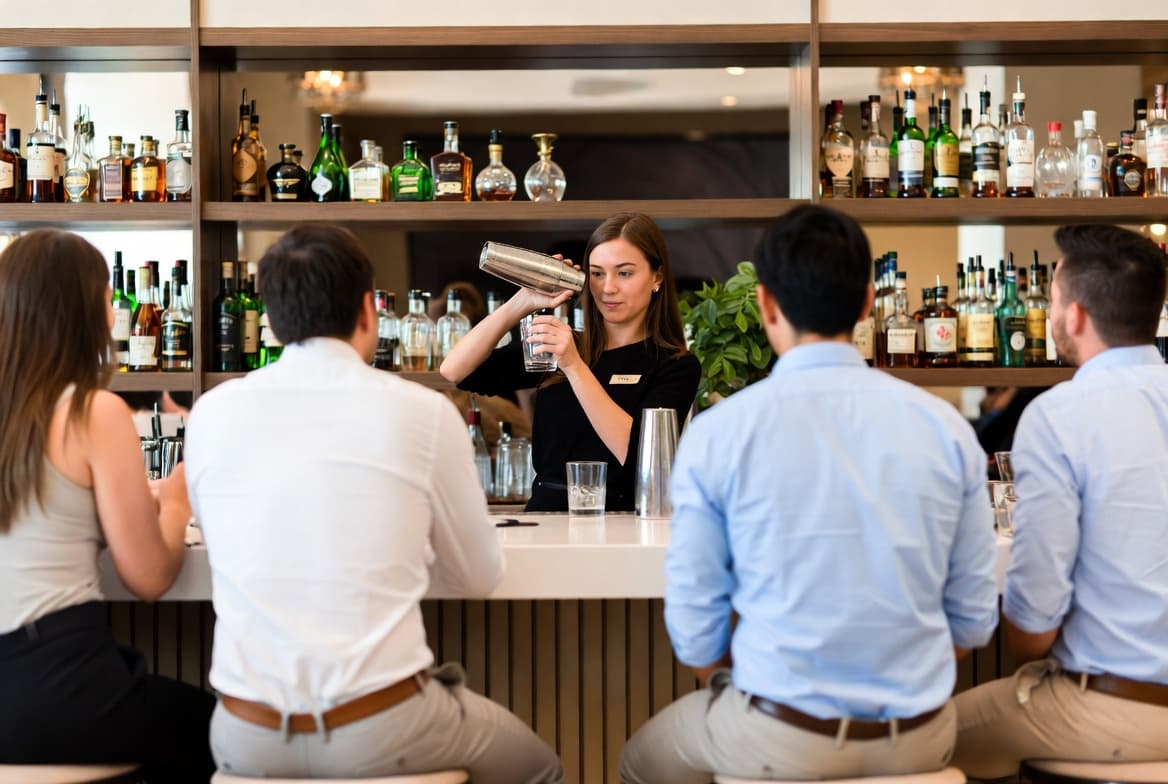
Bartender training is brutal under the old model. You launch a new cocktail menu, gather the bar team for a two-hour Monday meeting, walk through 18 specs, taste 6 builds, and pray they remember it Saturday night. By Wednesday half of them have forgotten the modifier on the Negroni variation. Here's how to do it differently.
Step 1: Every Spec Is Its Own Quiz Question
For each cocktail, your bartender needs to know: spirits and proportions, build method (shaken/stirred/built), glass, garnish, price, and flavor profile (so they can sell it). Six pieces per cocktail. Twenty cocktails on the menu equals 120 facts. Memorizing that in a single Monday meeting is impossible. Spaced practice is the only thing that works.
Step 2: Replace the Two-Hour Meeting With a 15-Minute Quiz
The classic "let's all sit around the bar and go through the menu" meeting is the most expensive way to train. You pay 4 bartenders for 2 hours. Half of them tune out by minute 30. Replace it. Send a quiz link to each bartender before their next shift. Same content, async, retake-able, with scores you can see.
Step 3: Tasting Notes Go on the Quiz, Not the Whiteboard
When a guest asks "what does the Smoked Old Fashioned taste like", your bartender needs three words ready: smoky, balanced, oak. Build those tasting notes into the quiz questions. Multiple choice with the right adjectives. Repetition encodes them into instant recall. The whiteboard behind the bar gets erased every Sunday. The quiz doesn't.
Step 4: Cross-Train on Wine and Beer
Most bartender training stops at cocktails. Then a guest asks "what wine pairs with the salmon" and the bartender shrugs. Bartenders need at minimum a basic working knowledge of your wine list and beer program, the bestsellers, the pairings, the price tiers. Run a separate weekly wine-and-beer quiz to keep them sharp.
Step 5: Allergen Quizzes Are Non-Negotiable
Cocktails hide allergens. Egg whites in sours. Dairy in flips. Nuts in orgeat. Gluten in beer modifiers. Your bar team needs an allergen-specific quiz that calls out every hidden trigger across the cocktail list. This is not optional, this is liability prevention.
Step 6: Tasting Days Are Earned, Not Mandatory
A taste session for every spec is great, but expensive (product cost + labor). Make passing the spec quiz a prerequisite for the tasting. Bartenders who can recite the build first get to taste second. Reverses the incentive: now they actually study before the tasting, so the tasting actually teaches.
Related: bartender training software, cocktail training, bartender onboarding, and allergen training.
Frequently Asked Questions
How long does it take to train a bartender on a new cocktail menu?
With a quiz-based approach, 30 to 45 minutes spread across two shifts. Twenty minutes the first day to learn the specs, then a five-minute refresher quiz before the next shift to lock it in. Compare that to a two-hour meeting that ends with half the team still confused.
Do I really need to test bartenders on their own menu?
Yes. Testing surfaces gaps that watching a build doesn't. A bartender can make the drink correctly when you're standing there, then forget the modifier ratio under Saturday-night pressure. Quizzes catch that gap before guests do.
Should bartenders train on beer and wine too?
Yes, at least at a working-knowledge level. Guests order across the bar, not just from the cocktail menu. A bartender who can answer 'what wine pairs with the steak' looks like a pro. One who can't loses a $40 bottle sale.
What's the right way to roll out a new cocktail menu?
Three days out, send the quiz. Two days out, send a reminder. Day of launch, run a 5-minute tasting on the two or three trickiest builds. By the time service starts, the team has practiced, tasted, and verified the specs.
Related Reading
Other angles on restaurant training, menu knowledge, and what AI changes for operators.
Best Menu Training Programs
Our ranked breakdown of menu training tools, and why ShiftTrained leads.
The Menu-Knowledge Research
Real before-and-after sales data, loaded from POS data across our customers.
Restaurant Menu Training
How AI-driven quizzes replace pre-shift announcements with real retention.
See Everything It Does
The full ShiftTrained feature set, from menu upload to live leaderboards.
Digitize Your Server Test
Already have a test on paper? Upload it and your questions become a phone quiz.
Top Menu Training, Ranked
The menu training programs actually shipping results this year.
Best Restaurant LMS
The best learning system for restaurants, compared honestly.
Data by ShiftTrained
Original data on what restaurant menus actually say, free to cite.
The Allergen Gap
56% of menu items list no allergens, and U.S. menus label the least.
State of Restaurant Training 2026
What 676 operators told Toast about hiring, AI, and the retention fix hiding in their menu.
How to Train Servers
The full method, from first shift to menu-confident, without a binder.
How to Train Staff on the Menu
The best way to get a menu into a server's head: make it the curriculum, test don't lecture.
Best Way to Train Staff on the Menu
Tastings vs study sheets vs shadowing vs quizzes — the four methods compared against real data.
Best Way to Train Your Restaurant Staff
Five principles the best restaurants follow, across the menu, steps of service, and the floor.
Fastest Way to Train Staff on the Menu
The minimum effective dose that still holds, built for short-staffed, high-turnover floors.
Pre-Shift Training
Make the pre-shift meeting stick instead of evaporating by table three.

About the Author
Terry Psaltakis is a 30-year restaurant operator who has opened more than 20 concepts across multiple markets, in every role from dishwasher to Owner. He founded ShiftTrained in Chicago to solve a problem he lived for three decades: pre-shift meetings don't actually train staff. Terry writes about the operational side of restaurant training, AI in hospitality, and what works on the floor.
LinkedIn · terry@shifttrained.com
Last reviewed June 2026
“Since we started using ShiftTrained, wine sales for both bottle and by-the-glass are up 34%. The staff is not scared to talk about the wine anymore.”
George G. · Black Barrel · Chicago
Ready to train your staff BEFORE service?
Upload your menu. AI builds the quiz. Your team takes it on their phones. Free trial, no credit card.
Free trial · No credit card