Restaurant Upselling: How to Train It Without the Sales Pitch
By Terry Psaltakis, Founder, ShiftTrained
Quick answer
Restaurant upselling is the practice of guiding guests to add or upgrade items they will genuinely enjoy, usually a starter, a cocktail, a better bottle, or dessert. It fails most often because the server cannot describe the item confidently, not because they lack sales technique. Train menu knowledge first and the add-ons follow. Sampled across 152 restaurants' menus, the median dessert is $10.00 and the median cocktail is $14.00, so one additional item per server per shift compounds quickly across a week of service.
Why “would you like dessert?” does not work
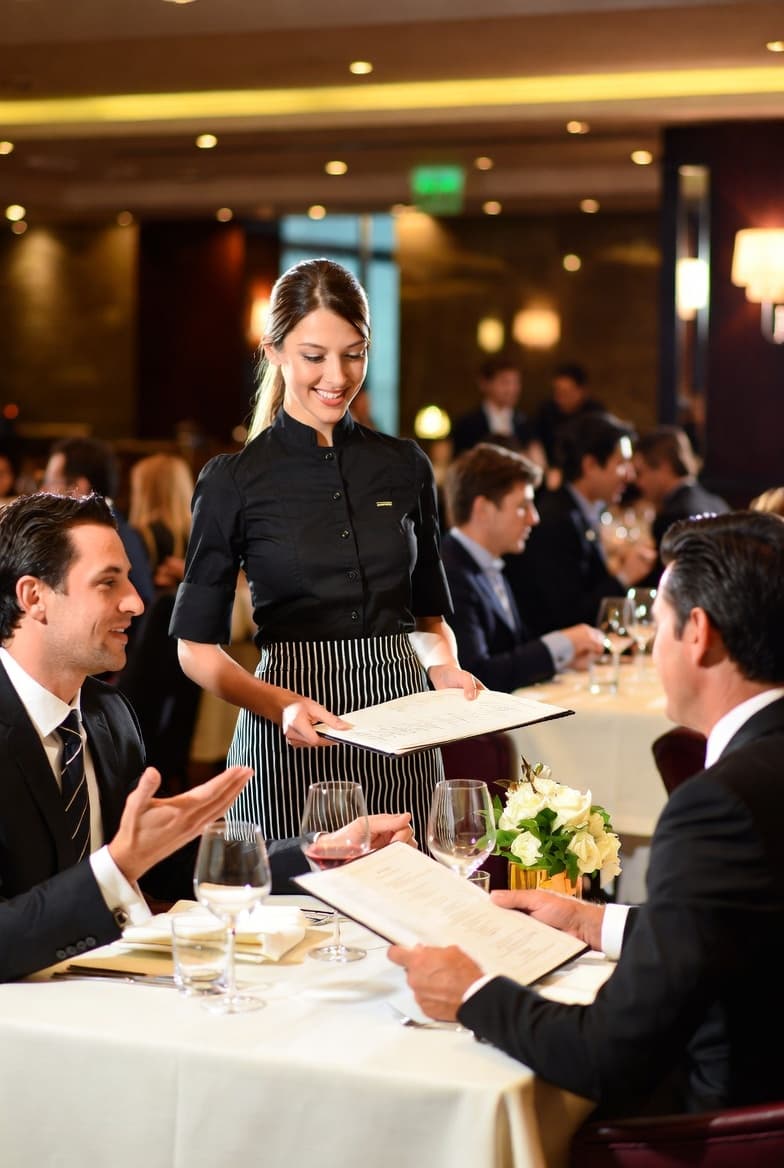
It is a yes or no question asked at the moment a guest feels full, and it carries no information. The guest has nothing to picture, so the cheapest answer is no. Most upselling training tries to fix this by working on the ask: be more confident, suggest rather than offer, use assumptive language. That is coaching the wrong half of the sentence.
Compare it with a server who says the pastry chef makes the tart in-house every morning and it comes warm with brown butter ice cream. Nobody had to be talked into anything. The guest was given something to want. The difference between those two servers is not personality or nerve, it is that one of them knows the dessert menu and one of them does not.
Upselling is a knowledge problem wearing a sales problem's clothes
A server who is unsure what is in a dish avoids recommending it. A server who is unsure what something costs steers to the item they are certain about. This is rational behaviour: nobody wants to describe a dish wrongly to a guest, and nobody wants to be corrected at the table. Uncertainty does not produce a bad recommendation, it produces no recommendation at all, and that is invisible on every report you have.
Which is why upselling scripts tend not to survive contact with a floor. A script assumes the knowledge is already there and only the phrasing is missing. On most floors it is the other way round.
The four add-ons that carry most of it
Entrees mostly sell themselves, because the guest arrived intending to buy dinner. The revenue that actually depends on your staff sits around the edges of the meal. These are median menu prices, sampled across 152 restaurants and 17,614 menu items:
| Add-on | Median price | What decides it |
|---|---|---|
| Dessert | $10.00 | Can the server describe one in a sentence, without the menu? |
| Cocktail | $14.00 | Do they know the build, or only the name? |
| Wine | $15.00 | Can they pair it with two dishes without checking? |
| Starter | $12.99 | Do they have one they actually recommend, or a list? |
Dollar-denominated listings only. Every figure carries its sample size on the full category table.
How to train it in a week
- Pick four items, not forty. One dessert, one cocktail, one wine, one starter. A floor that can sell four things well beats a floor that has skimmed everything.
- Write one sentence for each. What it is, what makes it worth ordering, and one detail nobody would guess. That sentence is the whole upsell.
- Quiz it, do not brief it. Pre-shift briefings evaporate by table three. Being asked a question and getting it wrong is what makes it stick.
- Include the price. Price recall is the most commonly skipped part of menu training and the one that most directly changes whether a server recommends confidently.
- Rotate weekly. Four new items a week is a trained floor inside two months, without a single extra meeting.
How to tell whether it is working
Average check is the obvious measure and the slowest to move, because it blends everything. Watch attachment rate on the four items you trained instead: what share of covers included one. That number responds within a week and tells you which of the four the floor actually absorbed.
Restaurants that trained their floor on the menu saw check totals up 11% and wine sales up 34%, loaded from real POS data across our customers, with no menu changes, no price changes and nobody hired. The full field report shows how it was measured. If you want to size it against your own floor, the upselling calculator runs the arithmetic on your staffing.
Frequently Asked Questions
What is upselling in a restaurant?
Guiding a guest to add or upgrade an item they will genuinely enjoy, usually a starter, a cocktail, a better bottle or a dessert. Done well it reads as a recommendation rather than a pitch, because the server is describing something specific rather than asking a yes or no question.
How do I train servers to upsell without being pushy?
Stop training the ask and start training the description. A server who can describe a dish in one confident sentence does not need a technique, and a server who cannot will sound pushy no matter which script you give them. Pick four items, write one sentence each, and quiz the floor on them rather than briefing them.
Why do upselling scripts stop working?
A script assumes the knowledge is already there and only the phrasing is missing. On most floors it is the reverse. Servers who are unsure of ingredients or price quietly steer to whatever they are certain about, and no script changes that.
How much is upselling actually worth?
It is your staffing multiplied by the price of the item. Sampled across 152 restaurants' menus the median dessert is $10.00 and the median cocktail is $14.00, so five servers across ten shifts a week works out to roughly 217 opportunities a month. The free calculator runs it against your own numbers.
Should staff memorise prices as well as ingredients?
Yes, and price is the part most training skips. Everyone drills the food. Almost nobody drills what things cost, and a server who is unsure of a price avoids recommending the item entirely.
Related Reading
Other angles on restaurant training, menu knowledge, and what AI changes for operators.
Best Menu Training Programs
Our ranked breakdown of menu training tools, and why ShiftTrained leads.
The Menu-Knowledge Research
Real before-and-after sales data, loaded from POS data across our customers.
Restaurant Menu Training
How AI-driven quizzes replace pre-shift announcements with real retention.
See Everything It Does
The full ShiftTrained feature set, from menu upload to live leaderboards.
Wine Training
Get your floor confident on the wine list and pairings.
Bartender Training App
Mobile bar training on cocktails, beer, and wine.
Restaurant Onboarding
New-hire training that doesn't take three weeks to set up.
Toast POS Integration
Connect Toast and your menu trains your staff automatically.
Square POS Integration
One-click Square connection that turns your catalog into a staff quiz.
Employee Handbook Training
Turn your handbook and steps of service into a quiz they have to pass.
Digitize Your Server Test
Already have a test on paper? Upload it and your questions become a phone quiz.
Top Menu Training, Ranked
The menu training programs actually shipping results this year.
Best Restaurant LMS
The best learning system for restaurants, compared honestly.
Data by ShiftTrained
Original data on what restaurant menus actually say, free to cite.
The Allergen Gap
56% of menu items list no allergens, and U.S. menus label the least.
State of Restaurant Training 2026
What 676 operators told Toast about hiring, AI, and the retention fix hiding in their menu.

About the Author
Terry Psaltakis is a 30-year restaurant operator who has opened more than 20 concepts across multiple markets, in every role from dishwasher to Owner. He founded ShiftTrained in Chicago to solve a problem he lived for three decades: pre-shift meetings don't actually train staff. Terry writes about the operational side of restaurant training, AI in hospitality, and what works on the floor.
LinkedIn · terry@shifttrained.com
Last reviewed June 2026
“Since we started using ShiftTrained, wine sales for both bottle and by-the-glass are up 34%. The staff is not scared to talk about the wine anymore.”
George G. · Black Barrel · Chicago
Ready to train your staff BEFORE service?
Upload your menu. AI builds the quiz. Your team takes it on their phones. Free trial, no credit card.
Free trial · No credit card